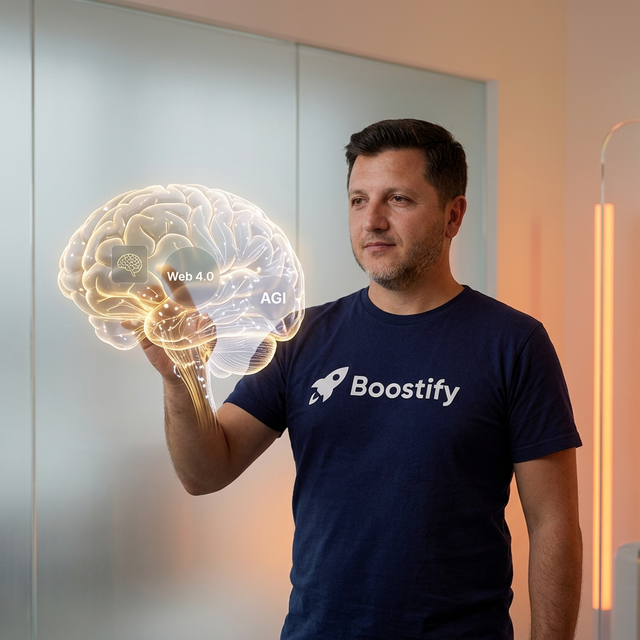


A nova fronteira da descoberta: dos motores de busca aos motores de resposta
Por quase duas décadas, o mantra do marketing digital foi claro: se você não aparecia na primeira página do Google, não existia. Empresários no Brasil e Chile investiram milhares de dólares em SEO, Google Ads e conteúdo para capturar aquele usuário que digitava «fornecedor de software contábil em São Paulo» ou «consultoria de marketing digital em Santiago». Mas o jogo está mudando mais rápido do que muitos imaginam.
Hoje, uma parcela crescente dos seus potenciais clientes B2B não está escrevendo no Google. Eles estão abrindo ChatGPT, Perplexity ou Gemini e fazendo perguntas em linguagem natural: «Qual é a melhor agência de marketing B2B no Brasil para empresas SaaS?» ou «Me recomende um CRM para startups no Brasil com integração ao WhatsApp». E a IA responde com uma única fonte, muitas vezes sem listar concorrentes. Se seu negócio não está nessa resposta, simplesmente não existe para aquele comprador.
O que é AEO (Answer Engine Optimization)?
AEO, ou otimização para mecanismos de resposta, é o processo de estruturar seu conteúdo e dados para que sistemas de inteligência artificial generativa (como ChatGPT, Gemini, Perplexity, Copilot) o selecionem como fonte autorizada ao responder perguntas de usuários. Não se trata de palavras-chave exatas, mas de autoridade temática, estrutura semântica e dados verificáveis.
Enquanto o SEO tradicional otimiza para um algoritmo de ranqueamento (PageRank, relevância de palavras-chave), o AEO otimiza para um modelo de linguagem que prioriza clareza, profundidade e citação de fontes confiáveis. Isso é especialmente crítico no mercado B2B da América Latina, onde a confiança e a especialização local pesam mais do que em mercados de massa.
Por que o AEO é a janela de oportunidade para Brasil e Chile (como o SEO há 15 anos)
Em 2008, poucas empresas brasileiras ou chilenas entendiam SEO. Quem investiu cedo em conteúdo otimizado para o Google capturou tráfego orgânico massivo por anos, a um custo por aquisição ridiculamente baixo. Hoje, o SEO na América Latina está saturado: milhares de agências, dezenas de ferramentas e uma competição feroz por palavras-chave genéricas.
O AEO está hoje onde o SEO estava em 2008. A janela de entrada ainda está aberta, especialmente em português e espanhol. Os modelos de linguagem ainda treinam predominantemente com dados em inglês. Quem publicar conteúdo estruturado, autoritativo e localizado em português e espanhol agora, serão as fontes padrão quando um comprador B2B brasileiro ou chileno perguntar a uma IA sobre seu setor.
Dados recentes da Gartner (2024) indicam que 47% dos compradores B2B já usam assistentes de IA para pesquisar fornecedores. Em mercados LATAM, esse número cresce 12% ao trimestre. Se seu conteúdo não está otimizado para ser citado por uma IA, você está perdendo uma oportunidade que não voltará.
Como funciona a seleção de fontes nos principais mecanismos de resposta
Cada plataforma tem critérios ligeiramente diferentes, mas todas compartilham princípios comuns que você pode aproveitar:
- ChatGPT (OpenAI): Usa um modelo de linguagem treinado com dados até 2024. Para respostas atualizadas, recorre à navegação na web (Bing) e prioriza fontes com alta autoridade de domínio, estrutura clara (perguntas e respostas) e conteúdo original. Sites com dados estruturados (FAQ Schema, HowTo Schema) têm maior probabilidade de serem citados.
- Perplexity: É o mais transparente: mostra as fontes exatas de cada resposta. Prioriza conteúdo acadêmico, governamental e de mídias reconhecidas, mas também blogs técnicos com referências sólidas. Citações a estudos, estatísticas e casos reais aumentam drasticamente suas chances de aparecer.
- Gemini (Google): Integrado ao ecossistema do Google, prioriza conteúdo já bem ranqueado em buscas tradicionais, mas com ênfase em respostas diretas e trechos em destaque (featured snippets). O SEO clássico ainda é relevante, mas agora você também precisa responder perguntas de forma explícita e concisa.
Estratégia prática de AEO para empresas B2B no Brasil e Chile
1. Identifique as perguntas que seu cliente ideal faz a uma IA
Não presuma que você sabe o que eles perguntam. Use ferramentas como AnswerThePublic, AlsoAsked e a análise de conversas reais de vendas. No B2B LATAM, as perguntas típicas incluem:
- «Quanto custa implementar um CRM para uma PME no Brasil?»
- «Qual agência de marketing B2B no Chile trabalha com empresas de tecnologia?»
- «Como escolher um fornecedor de automação de marketing em São Paulo?»
Crie uma base de dados de 50 a 100 perguntas reais, agrupadas por estágio do funil (descoberta, consideração, decisão).
2. Crie conteúdo estruturado no formato pergunta-resposta
Os mecanismos de resposta amam conteúdo que responde diretamente uma pergunta nos primeiros parágrafos. Estruture seus artigos assim:
- H2: Pergunta exata do usuário (ex: «Quanto custa uma campanha de Google Ads B2B no Brasil?»)
- Parágrafo inicial: Resposta direta, concisa (2-3 linhas) com dado concreto.
- Resto do artigo: Aprofunde com contexto, exemplos, dados, estudos de caso.
Exemplo real: se você responder «Uma campanha de Google Ads B2B no Brasil custa entre R$5.000 e R$20.000 mensais, dependendo do setor e da concorrência», a IA toma essa resposta como fonte.
3. Implemente dados estruturados (Schema Markup) específicos para AEO
Use FAQ Schema, HowTo Schema, e QAPage Schema em todas as suas páginas de conteúdo. No Brasil e Chile, a adoção de Schema ainda é baixa, o que te dá uma vantagem competitiva imediata. Ferramentas como Yoast SEO, Rank Math ou Schema Pro facilitam a implementação sem código.
Além disso, garanta que seu site carregue rápido (< 2 segundos no celular) e tenha uma estrutura de links internos clara. A IA valoriza a navegabilidade.
4. Construa autoridade temática local
Os modelos de linguagem priorizam fontes que demonstram expertise em um tema e região específicos. Para uma agência B2B no Brasil, isso significa:
- Publicar conteúdo sobre regulamentações locais (ex: Lei Geral de Proteção de Dados – LGPD).
- Mencionar casos de sucesso com empresas brasileiras ou chilenas reais.
- Obter backlinks de mídias locais reconhecidas (Valor Econômico, Estadão, etc.).
- Manter perfis atualizados no LinkedIn e Google Business Profile.
A IA não busca apenas informação; busca confiança contextual. Se você é a única fonte que fala de «marketing B2B para fintechs no Brasil com integração ao Pix», você se tornará a resposta padrão.
Erros comuns que você deve evitar
- Copiar conteúdo genérico em inglês: As IAs detectam conteúdo traduzido automaticamente e o penalizam. Escreva originalmente em português ou espanhol, com nuances locais.
- Ignorar a atualização constante: Os modelos de linguagem são atualizados periodicamente. Se seu conteúdo tem dados de 2022, será substituído por fontes mais recentes. Revise e atualize a cada 6 meses.
- Não medir: Diferente do SEO, onde você vê tráfego orgânico, o AEO não tem métricas diretas. Use ferramentas como Brand24, Mention ou consultas manuais no ChatGPT/Perplexity para monitorar se sua marca aparece nas respostas.
O momento de agir é agora
A janela de oportunidade para se posicionar em mecanismos de resposta no Brasil e Chile não durará para sempre. Em 12 a 18 meses, a competição será tão feroz quanto é hoje o SEO tradicional. As empresas B2B que investirem agora em AEO —com conteúdo localizado, estruturado e autoritativo— construirão uma vantagem competitiva que seus concorrentes levarão anos para alcançar.
Na Boostify, começamos a implementar essas estratégias para nossos clientes no Brasil e Chile. Os resultados iniciais mostram que quem adota AEO cedo está aparecendo em respostas do ChatGPT e Perplexity para consultas-chave de seu setor, enquanto seus concorrentes continuam competindo apenas por palavras-chave no Google.
A pergunta não é se seus clientes perguntarão a uma IA. A pergunta é se seu negócio estará na resposta.